
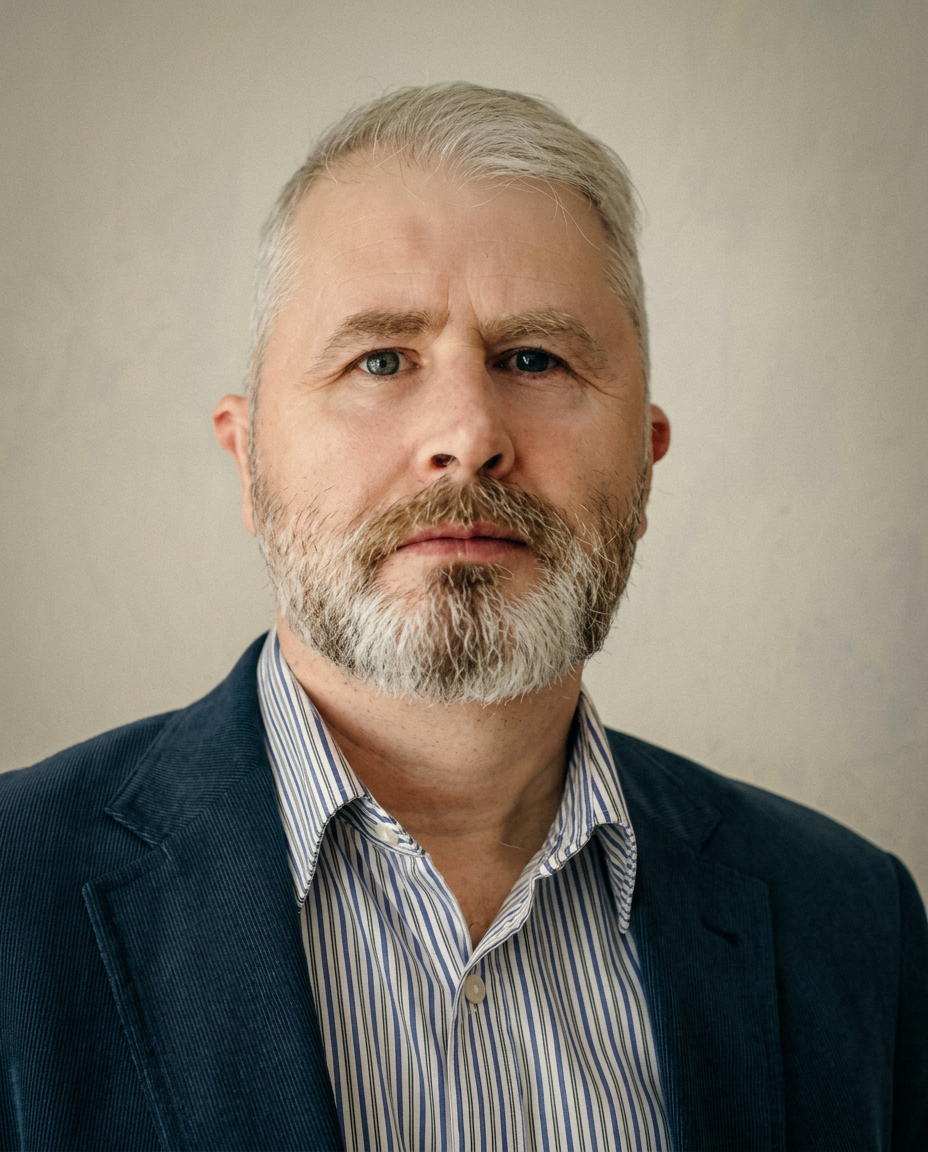
Merlin Lockey
Working at the intersection of individual leadership and organisational architecture — because transforming one without the other rarely holds.
Leadership begins where performance ends.
Most leadership development starts and ends with the individual — sharpening judgment, deepening self-awareness, doing the inner work. That work matters. But a psychologically whole leader inside a structurally broken organisation doesn't fix the system. They simply suffer more acutely inside it — aware of exactly what's wrong, without the architecture to change it.
I work at the intersection of both. With CEOs, founders, and boards navigating succession, AI-driven transformation, crisis, or the slower erosion of meaning beneath a successful career, I address the leader's inner architecture and the organisation's structural architecture together — because transforming one without the other rarely holds.
I once stepped into a residential training centre as replacement director, after my predecessor had voluntarily stepped aside — the operation was beyond their capacity to manage. What I found was a demotivated, under-strength workforce, volunteers effectively press-ganged into covering the gaps, semi-cooperative site stakeholders, and an owner quietly masking the extent of the problems. I built genuine trust with the volunteer team — enough that their lead asked me never to leave — and operational performance improved. But administrative dysfunction persisted: staff covering mistakes rather than surfacing them, protecting themselves rather than the mission. I learned that no matter how capable or genuine a leader is, individual competence cannot repair a system that isn't willing to be honest with itself — at some point, the architecture itself has to change, not just the person leading it.
The method is Socratic rather than prescriptive. I don't arrive with a framework to impose. Grounded in over three decades of depth psychology — including a degree in Psychology and a postgraduate qualification in Existential Well-being Counselling — and tested first in my own life, through service as a Special Observer with the Royal Artillery and a career in academia and corporate training and consultancy spanning the UK, MENA, and Central Europe.
If you're a leader who has done the inner work and still feels the system beneath you isn't holding — or a leader who suspects the system needs to change but doesn't yet know where to begin with themselves — I'd welcome a confidential, unhurried conversation.
Arrange a confidential conversation.
For executives, founders, and reflective leaders navigating transition, uncertainty, reinvention, or the deeper questions that emerge beyond performance.
These conversations are confidential, thoughtful, and exploratory in nature.
Replies are personal and considered. Allow a few days.